It’s one thing to generate data. It’s another thing to put it to use.
Modern airports generate enormous amounts of operational data every day, from baggage handling and passenger processing to equipment monitoring, controls, flight information and other airport systems. But data alone doesn’t improve an operation. Airports must turn that information into a clear operational picture that helps their teams understand what is happening, respond faster and make better decisions.
That is where operational intelligence becomes increasingly important.
Daifuku Airport Technologies helps airports connect equipment, controls, monitoring technologies and software to create a more integrated operational environment. By bringing information together and making it easier to understand, airports can move from reactive decision-making toward a more proactive, data-driven approach.
The opportunity potential is significant: better visibility can help airports improve baggage flow, respond to operational issues faster, make more informed staffing decisions, support capacity planning and ultimately create a smoother experience for passengers. Read on to learn more:
Why Operational Intelligence Matters at Modern Airports
Airport operations are becoming more complex. Passenger volumes continue to increase, flight schedules are tightly coordinated, and airport operators face ongoing workforce pressures. At the same time, passengers expect flights to depart on time, baggage to arrive when they land and every part of the airport journey to work as efficiently as possible.
Meeting those expectations requires more than individual systems performing their assigned functions.
Many airports operate with multiple equipment vendors, monitoring tools and independent control systems. When those technologies operate in isolation, operators often must gather information from different sources to understand what’s happening across the operation. That can delay responses, make problems harder to identify and encourage reactive rather than proactive decision-making.
Instead of simply monitoring individual pieces of equipment, an operational intelligence approach creates a broader view of how systems are performing and how they interact. For airport operators, the “so what?” is straightforward: better visibility can lead to faster decisions, fewer disruptions and more efficient use of airport resources.
From System Visibility to a Unified Operational Picture
Integration is the foundation of operational intelligence.
Within baggage operations, conveyors, sortation systems, vehicles and automated transport technologies need to work together as part of a coordinated process. Daifuku’s approach combines equipment, controls, monitoring and software to help create that coordination.
This can include:
- Coordinating equipment operation
- Managing system-wide communication
- Facilitating intelligent routing decisions
- Synchronizing equipment
- Monitoring system performance
- Aggregating operational data through software
The value isn’t simply having more information. It’s being able to understand what that information means in the context of the overall operation.
For example, operators can monitor throughput rates, queue lengths, conveyor and sortation efficiency, transfer baggage timing and equipment readiness. That visibility can help workers identify developing bottlenecks before they become larger operational problems.
It often results in reduced congestion, faster response times and more predictable baggage movement, all of which contribute to broader goals of airport efficiency and passenger satisfaction.
Turning Baggage Data Into Better Operational Outcomes
Baggage handling provides a clear example of why operational intelligence matters.
Moving bags from check-in to an aircraft and ultimately to the passenger requires coordination across multiple processes. A system may successfully move bags from Point A to Point B, but airport operators also need to know whether the system is operating efficiently, where delays are developing and how performance changes during peak periods.
Historical and real-time data can help airport teams understand throughput, identify recurring bottlenecks and refine workflows. It can also support more informed responses when operational conditions change.
The business outcomes can extend beyond baggage movement itself. Better visibility and control can help airports work toward:
- Fewer missed or mishandled bags
- Improved on-time performance
- Faster response to operational exceptions
- More efficient use of available staff
- Shorter turnaround times
- Greater passenger satisfaction
- Increased capacity and throughput
These aren’t simply technology metrics. They are operational and business priorities that directly affect an airport’s ability to serve passengers efficiently.
From Reactive Operations to Predictive Decision-Making
The next evolution of airport operational intelligence is not simply seeing what is happening now. It is using operational and historical information to anticipate what could happen next.
As airports accumulate more data, they have an opportunity to identify patterns in system performance, peak-period demand, equipment behavior and operational bottlenecks. That information can support more proactive planning and decision-making.
This is where predictive analytics and AI-driven decision support are becoming increasingly relevant to the future of airport operations.
Rather than waiting for congestion to build or equipment performance to deteriorate, airport teams can increasingly use data to identify conditions that may require attention. Predictive approaches can support maintenance planning, resource allocation, capacity planning and operational adjustments before an issue creates a larger impact.
Daifuku’s broader digital direction supports this evolution. The objective is not to replace human decision-making. It is to give airport teams better information with which to make those decisions.
Simulation and Visualization: Preparing for What Comes Next
Operational intelligence also has value before an airport system is even operating.
Daifuku’s solutions can be used to validate layouts, capacity and operational scenarios. Once systems are operating, the platform provides visualization and live product tracking, including the ability to view systems locally or remotely.
That creates an important connection between planning, implementation and day-to-day operations.
Instead of treating system design, commissioning and operations as separate stages, airports can use digital tools to better understand how systems are expected to behave, test scenarios and analyze operational challenges.
For airport operators, the benefit is practical: better preparation can reduce surprises during implementation, while better visualization during operations can help teams understand problems and respond more effectively.
Daifuku has also mixed in visualization control software as part of its airport strategy, alongside airport operating management systems, labor-saving technologies and self-service solutions.
Extending Intelligence Across the Airport
The value of operational intelligence doesn’t stop at baggage handling.
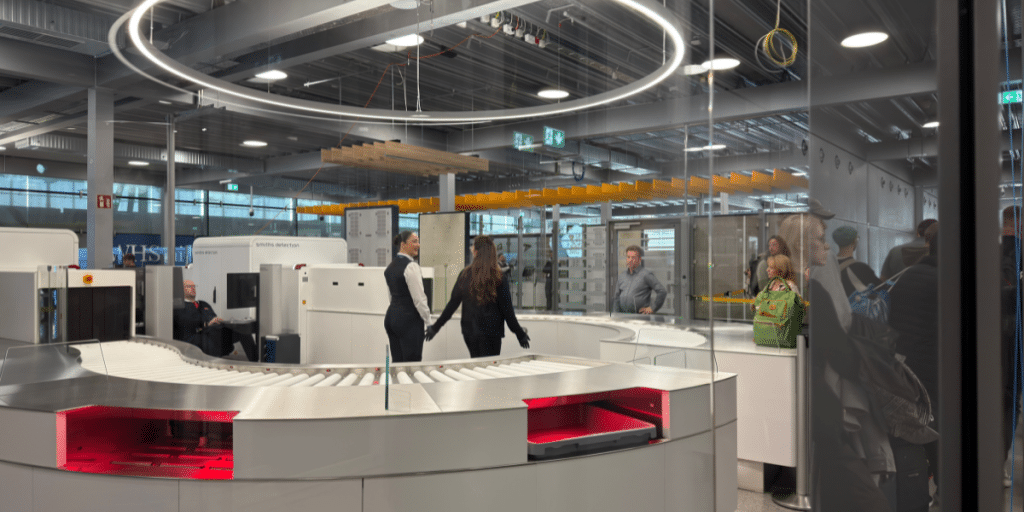
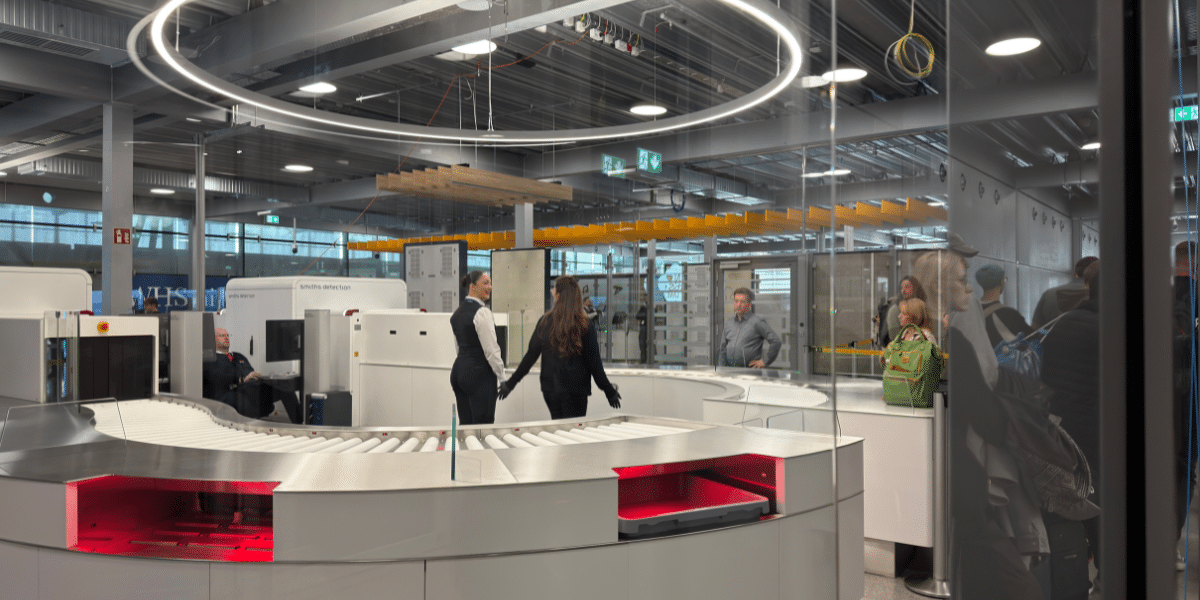
Daifuku Airport Technologies’ portfolio includes baggage handling systems, self-service technologies, security screening, checkpoint screening, control systems, simulation, airport operation systems, and operations and maintenance services.
The common thread is not a single piece of equipment or software application. It is the ability to connect operational information, automation and decision-making.
Automation That Supports People and Performance
Automation is another important part of this evolution.
Airports face pressure to handle growing passenger volumes while managing labor availability and controlling operating costs. Data can help airport leaders make more informed staffing decisions, while automation can reduce the amount of manual intervention required for repetitive processes.
The goal is not to just automate for automation’s sake. It is to deploy automation where it can produce measurable operational value.
Daifuku’s airport portfolio includes self-service baggage check-in, automated baggage handling and inspection technologies, security lanes and other solutions designed to address growing passenger volumes and labor challenges.
Integration Is the Foundation for Continuous Improvement
Individual technologies can deliver significant value. But disconnected systems limit that value.
When operators have to move between different monitoring systems, manually reconcile information or coordinate processes that aren’t communicating with one another, response times increase and opportunities for optimization are missed. An integrated approach creates a different operating model.
Equipment, controls, monitoring and software can work together to provide a shared operational picture. Airport operators, maintenance teams and other stakeholders can work from the same information, improving collaboration and creating a common reference point for decision-making.
Over time, that creates a cycle of continuous improvement, and the airport becomes more capable of responding to changing conditions.
The Future of Airport Operations Is More Predictive, Connected and Automated
Airports aren’t getting any less busy. Passenger expectations aren’t declining. Operational complexity isn’t going away.
The answer isn’t simply collecting more data. Airports need to turn that data into action.
That means creating visibility across systems, integrating equipment and controls, using historical information to understand performance, applying automation where it makes the greatest impact and increasingly using predictive analytics and AI to anticipate operational needs.
For airport leaders, the ultimate measure isn’t how much data a system produces. It’s what that information helps the airport accomplish: fewer disruptions, more efficient staffing, faster responses, improved baggage performance, stronger on-time performance, greater capacity and a better passenger experience.
Daifuku’s approach brings these capabilities together across airport technologies, combining physical automation with controls, monitoring, software and digital systems to help airports move toward a more connected and intelligent operating environment.
The future airport won’t simply collect information about its operations. It will use the information to understand what’s happening, anticipate what comes next and make better decisions in real time.
Contact Daifuku Today
Daifuku Airport Technologies helps airports integrate equipment, controls, monitoring technologies and software to improve operational visibility and decision-making. With solutions spanning baggage handling, passenger processing, security, airport operation systems, automation and digital technologies, Daifuku can help airports build a more connected foundation.
Contact Daifuku to learn how an integrated approach to airport operations can help improve performance, support automation and turn operational data into actionable insight.
About Mark Zacharowski, Country Manager DACH
Mark Zacharowski is Country Manager DACH at Daifuku Airport Technologies, where he is responsible for business development, service operations, and strategic customer projects across Germany, Austria, and Switzerland. In this role, he collaborates closely with international teams, airports, and business partners to drive sales, service excellence, and the successful delivery of innovative airport and security technology solutions.
With more than 25 years of international experience, Mark has built a strong track record in aviation, logistics, sales, key account management, project management, and business development.
He began his career with a leading Asian airline, spending more than a decade in cargo sales. During this time, he gained extensive expertise in international air freight operations, customer relationship management, and stakeholder collaboration across the aviation and logistics sectors.
Mark later spent approximately 15 years with a global exhibition and trade fair construction company, serving as both Project Manager and Senior Executive Consultant. He led complex national and international projects for globally recognized clients, managing multidisciplinary teams and overseeing every stage of project delivery, from concept development through execution.
He also served as Global Key Account Manager for an international machinery and tooling manufacturer, with worldwide responsibility for the company’s Plastic Welding Division. In this position, he managed strategic partnerships and key customer relationships across multiple markets, driving business growth, identifying new opportunities, and supporting long-term global expansion.
Today, Mark leverages his extensive expertise in aviation, infrastructure, sales, and service management to help customers address complex operational challenges. He is actively involved in major airport projects, including those at Munich, Frankfurt, Berlin Brandenburg, and Cologne/Bonn airports, while also supporting executive decision-making through business case development, strategic analysis, and sustainable service solutions.
His focus is on building lasting customer partnerships, delivering operational excellence, and successfully implementing advanced technology solutions in a dynamic international environment.