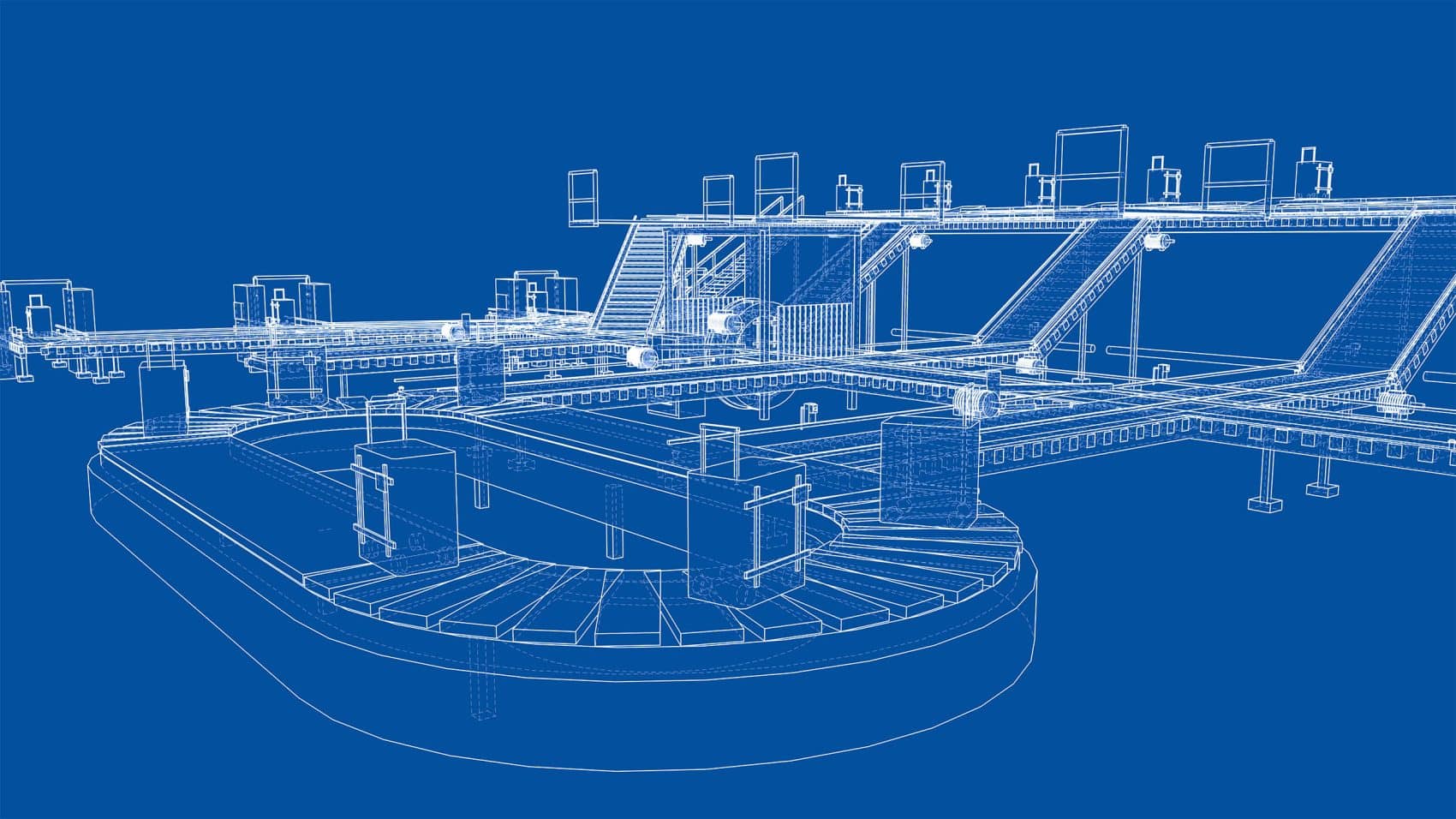
What Happens Before a Baggage Handling System Is Built? Understanding the Airport Tender Process
Automated baggage handling systems were once a “nice to have.” These days, they’re a “need to have” to cater to the increasing numbers of passengers and the expectations that they have when they enter the airport. But there’s a lot more that goes into acquiring the equipment and installing it in the airport’s footprint, and a lot of this hidden work happens well before the system is built. It largely involves aligning the many airport stakeholders that the system affects. These include airlines, airport operators, ground handlers and security personnel. All of them must agree on the requirements before the project goes to tender.
In this post, we’ll take a closer look at the baggage handling system (BHS) tender process to help you align stakeholders and manage early planning risk as you develop your system. Read on to learn more about what happens before a BHS is constructed and installed.
Step 1: Develop and Define Your Project Requirements
The first step in developing any baggage handling system (BHS) is to determine the full scope of the project. In most cases, you’ll want to look ahead up to 20 years and base any system on factors including:
- Anticipated annual passenger volume growth
- Expected peak passenger volumes
- Baggage profiles
- System throughput goals and KPIs (e.g., bags per hour for check-in, screening and sorting areas)
As with any BHS, it’s also important to consider current challenges and develop a strategy designed to overcome these bottlenecks. Another key part of any early strategy is determining the footprint you have to work with. In most cases, you won’t have an abundance of space or a brand-new terminal to outfit your system in, but rather an existing footprint to work with. This makes maximizing floor space important.
Step 2: Define Technical and Commercial Criteria
The next step is to define the criteria that you will use to compare the proposals. To help determine this, consider key operational elements and their long-term impact on your operations. Some of the technical factors that you’ll want to weigh when making your selection and aligning stakeholders include:
- BHS routing configurations (e.g., fallbacks, conveyor bypass loops, software modularity, etc.). These configurations and fallbacks help prevent terminal shutdowns and keep operations flowing.
- Integration with early baggage storage areas and the sorting control software. This helps ensure the terminal can scale to meet future demand without fundamentally changing the BHS structure or layout.
- Ask for references from similar projects and evaluate the engineering team that will deliver the project. This reduces risk and helps ensure the BHS project meets your expectations and stays on schedule.
- Understand the total cost of the BHS, including operation and maintenance. Define clearly what the fixed price includes to avoid hidden costs or unbudgeted change orders.
- Hold baggage screening and baggage tracking requirements. These requirements have a direct effect on the system layout and the controls.
- The installation sequence in a live terminal. In most projects, the airport must stay in operation during the works.
- Service and maintenance after handover. Include spare parts, response times and training in the tender documents.
Step 3: Consider the Sustainability Benefits
Sustainability is now a common evaluation criterion in airport tenders. Airports use a large amount of energy, so any opportunity to reduce carbon emissions and manage waste is worth pursuing.
One of the biggest power consumers is an airport’s infrastructure and operational systems, including baggage handling systems. Features to inquire about for the BHS include smart power controls and eco-friendly drive components. Advanced features such as sleep-mode activation help ensure that system conveyors aren’t running continuously, but only when they need to process luggage. Permanent-magnet motors and optimized gearboxes also help reduce power draw. In terms of sustainability, it’s often not one thing that makes a significant difference, but lots of little things that add up.
Sustainable airport operations are no longer optional. In 2021, Airports Council International (ACI) set a long-term goal for its member airports: net zero carbon emissions by 2050. Programs such as Airport Carbon Accreditation help airports measure, manage and reduce their carbon emissions.
By showing stakeholders how a BHS can align with short- and long-term sustainability goals, you can build buy-in for a more advanced, more efficient overall system.
Step 4: Determine the Return on Investment
One of the best ways to align stakeholders is to show them the true return on investment of the BHS. Often, key decision-makers focus only on the initial cost to acquire the equipment and how much it costs to install. In reality, the long-term return also includes faster processing, lower energy use and lower maintenance costs.
A good vendor can help determine the true return on investment over the full service life of the system, helping communicate the true value of the BHS to stakeholders and build buy-in.
Ask each bidder for a total cost of ownership calculation. Then you can compare all proposals on the same basis.
Step 5: Run the Tender
When the requirements and the criteria are ready, the formal tender starts. The stages below are typical. The names and the sequence can be different for each airport and each country.
- Market engagement: The airport can issue a request for information (RFI) or organize supplier workshops. This helps the airport to test its requirements before the tender.
- Prequalification: Vendors show their references, financial strength and certifications. The airport makes a shortlist.
- Request for proposal (RFP): The shortlisted vendors receive the requirements, the drawings, the contract terms and the evaluation criteria.
- Clarifications: Vendors ask questions during the tender period. The airport gives the same answers to all vendors.
- Evaluation: The airport scores each proposal against the published technical and commercial criteria.
- Negotiation and best and final offer (BAFO): Not every tender includes this stage.
- Award and contract: The airport informs all bidders of the result and signs the contract with the selected vendor.
Give vendors sufficient time to prepare a good proposal. Short deadlines and missing information increase the risk of assumptions and price contingencies.
Common Challenges (and How to Overcome Them)
As with any major investment or integration in the terminal, you’ll face challenges. Considering the number of stakeholders you need to align with a BHS, these challenges can quickly increase. Here are some BHS procurement pitfalls and how to avoid them:
Unclear scope
This is why Step 1 and Step 2 matter when considering a new BHS. Clearly define your goals and technical requirements so your BHS partner can design a system around these key objectives. Unclear scope leads to speculation and design assumptions rather than decisions grounded in objectives. Define what the system must achieve so your BHS partner can build a system that matches these goals.
Siloed data and poor communication
As you plan your BHS, part of the goal should be to develop a system that addresses bottlenecks and trouble spots. One of the biggest bottlenecks is a lack of system-wide data sharing, which forces parts of the system to operate in silos. Be clear and transparent with your BHS partner during planning. Share any data you have to get the most out of a new system, and be honest about key pain points so they can help you overcome them.
Insufficient testing
Automated baggage handling systems have been in operation for decades. There is a long track record to learn from when you select the system and the vendor for your facility. Ask each vendor how they simulate and test the BHS before installation, for example with a digital twin.
One of the best-known case studies in automated baggage handling involves the automated system at a North American airport in the 1990s. A report of the U.S. General Accounting Office (GAO) describes mechanical and software problems and unsuccessful system tests. The problems delayed the opening of the airport until February 1995. This case study underscores the need for rigorous testing, the importance of aligning scope with reality and of engaging all stakeholders at an early point.
Five Questions to Answer Before You Issue the Tender
- What must the BHS achieve, and how will you measure and test each result?
- • Are the passenger forecasts, baggage profiles and peak scenarios agreed by all stakeholders?
- • Are the scope boundaries, interfaces and responsibilities clearly documented?
- • Are the technical, commercial and sustainability criteria measurable and published?
- • Does the schedule give enough time for design, integration testing, trials, training and transition?
The best baggage handling systems are born from proper planning, lifecycle budgeting and stakeholder collaboration to ensure that all parties are on the same page. Treat the tender as more than a purchase. It is an investment and the start of a long-term partnership.
Do you plan a BHS tender? Contact our team to discuss your project.
About the Author
Abhishek Rathour is a Bid & Proposal Manager at Daifuku Airport Netherlands, specializing in strategic bid management, enterprise presales, and commercial development within the global technology and aviation sectors. He has extensive experience managing complex business opportunities, developing competitive bid strategies, and delivering customer-focused proposals across international markets.
At Daifuku, he leads end-to-end bid and proposal activities for airport automation and passenger-processing solutions. He works closely with customers, international stakeholders, multidisciplinary teams, and technology partners to drive opportunity development, capture planning, solution positioning, and commercial strategy. His focus is on translating complex technical and operational requirements into tailored solutions that deliver measurable customer value.
Prior to joining Daifuku, Abhishek held professional roles at Infosys and KPMG, where he worked across enterprise presales, strategic bidding, and business analysis, supporting clients and business opportunities across Europe and the Americas.
Combining his background in technology, business strategy, and commercial development, Abhishek brings a structured, collaborative, and customer-centric approach to complex business challenges. He is passionate about advancing innovative airport technologies, strengthening customer partnerships, and contributing to the evolution of airport automation and the future of aviation.