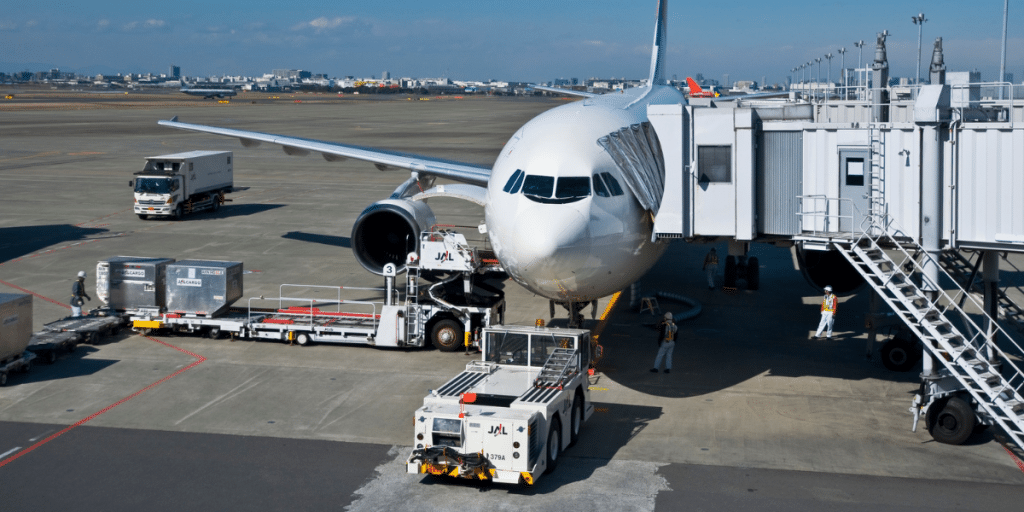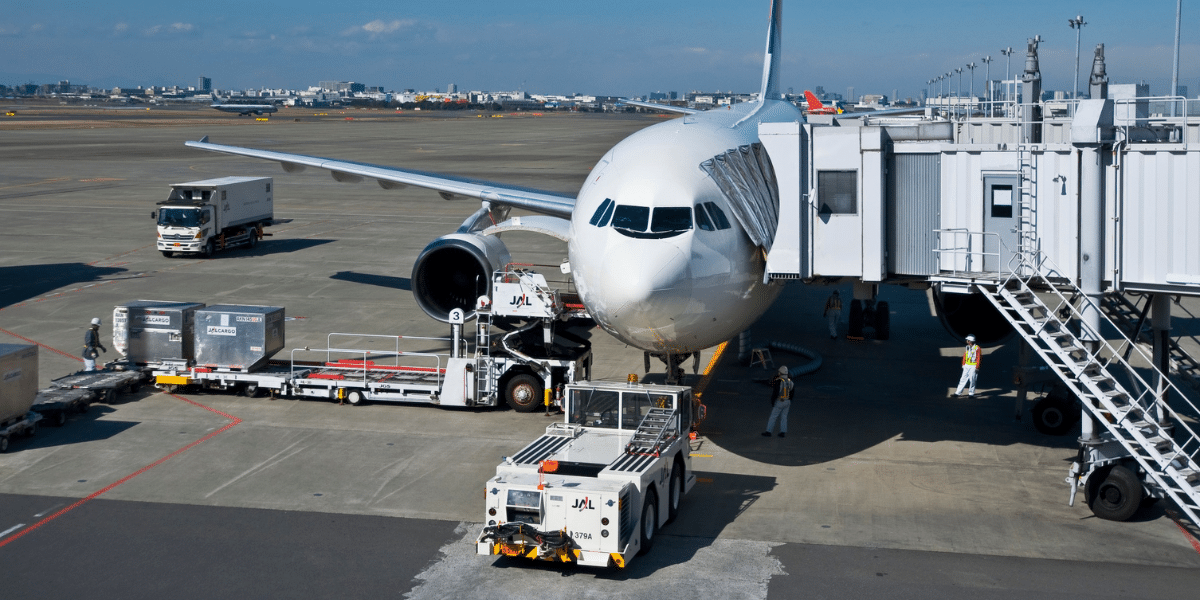
If you paid any attention the last time you took a commercial flight, you probably noticed a cart or Unit Load Device (ULD) full of luggage driving up to the plane. Airport workers then hopped out to manually remove all luggage from the cart and place each bag onto a conveyor ramp leading into the plane’s cargo hold.
The “last mile” term is typically associated with the transportation of goods, from the warehouse or distribution center to their final destination. In the context of an airport, “last mile” refers to the final leg of a bag’s journey, from when it’s checked in to when it is loaded onto the aircraft. And while baggage check and sortation has largely become automated at the airport, this last-mile journey from the output of the Baggage Handling System (BHS), to the aircraft cargo hold is still primarily a manual effort. However, it’s this last mile that’s emerging as a critical opportunity in baggage-handling system infrastructure at airports worldwide — benefiting airport operations and passengers alike.
In this post, we’ll discuss the importance of thinking beyond baggage claim in the context of automated systems and how automating last-mile operations can help set your airport apart as the gold standard. Read on to learn more:
Don’t Let the Last Mile Become an Afterthought
Right now, there’s an automation gap between baggage sortation systems and the airport’s last mile, where bags are loaded onto the aircraft. While most high-functioning airports rely heavily on automated solutions up until the last mile, aircraft loading (and unloading) still relies mostly on manually operated tractors and carts.
This is a process ripe for change, especially given the time it takes to load and unload baggage from aircraft and the increased pressure airlines face to turn around aircraft and maintain on-time flight schedules. Beyond timeliness (it’s estimated it can take up to 30 minutes to load an aircraft), there are plenty of other factors involved in last-mile load-in, including navigating weather and other airport traffic, as well as the labour-intensive process of towing carts and manually handling heavy bags.
Inside the terminal, the environment is controlled and predictable. But once you get outside and onto the tarmac, there are many more variables that workers have to manage as they work to load an aircraft.
The Airport Automation Gap
As we noted in the introduction, while baggage claim systems are largely automated in modern airports, last-mile load-in is not, creating a gap that can slow the overall process and put flights off schedule. Some of the issues that can arise from this gap include:
- Ramp congestion and delayed baggage loading times.
- Poorly sequenced baggage delivery.
- A greater risk of mishandled bags.
It’s estimated that airlines currently mishandle up to 7 bags per 1,000 passengers. Although this accounts for only about 0.65% of all checked luggage, it can significantly inconvenience passengers. Many bags are misplaced during tight connections, when workers are unable to promptly unload baggage from one aircraft and load it onto another one in time. Again, while rare, mishandled bags can cause big problems for passengers and for the airlines that need to locate and return bags to their customers.
So why does this gap between the terminal and tarmac exist? Historically, last-mile baggage handling has been very difficult to automate due to factors including tarmac traffic, mixed fleets, and strict safety and regulatory requirements. But thanks to solutions such as automated guided vehicles (AGVs) and autonomous mobile robots (AMRs), the operating model is ripe for change.
How Autonomous Mobility Can Streamline the Last Mile
By incorporating AGVs and AMRs into the baggage handling system, airports can fully automate the process and workflow for the benefit of their overall operations, airlines and passengers. Here’s how a likely workflow would unfold with AGVs and AMRs:
- Once checked in, the baggage handling system would release checked luggage to a transfer point within the terminal.
- The AGVs or AMRs would receive a dispatch assignment and navigate to the transfer point using mapped routes.
- Robots can safely and efficiently load baggage onto the carts/ Unit Load Device (ULD) towed by autonomous vehicles.
- The vehicles would then transport the luggage to the proper aircraft for loading.
- The vehicles then return to the transfer point or are reassigned to a new transfer point for their next task.
The biggest benefit isn’t simply autonomous luggage cart/ Unit Load Device (ULD) driving but complete integration with other aspects of the baggage-handling system. From the terminal to the cargo hold, autonomous vehicles and robotic solutions can help bridge the gap between check-in and load-in, streamlining the process.
Key Benefits of Utilizing AGVs at the Airport
In the early days of automation adoption, solutions largely operated in silos, optimizing certain tasks within their environments. It’s no longer enough for automation to work as standalone solutions. To maximize the full potential of automation, solutions must integrate and work together within any environment. In last-mile baggage handling, AGVs must work with check-in and flight operations. Key benefits include:
More timely baggage arrival times
The biggest benefit of integrating AGVs and AMRs into the last mile of baggage handling systems is the ability to further automate the process, resulting in more timely baggage arrivals. While humans will still supervise the process, automation will do all the heavy lifting, streamlining it and reducing the likelihood of mistakes. This helps improve consistency and leads to faster recovery from operational disruptions.
Less congestion and better traffic flow on tarmacs
By automating baggage handling with AGVs and AMRs, you’re also ensuring better traffic flow on the tarmac, which can be a busy place with so much activity. This allows for better control of vehicle interaction in such environments, improved situational awareness through fleet monitoring and fewer unnecessary vehicle movements.
Better sequencing for loading crews
Another benefit is the ability to minimize wait times at various checkpoints while streamlining sequencing for loading crews. This real-time coordination is especially valuable for adapting to changes and for responding more quickly to gate changes, stand changes, pushback, fueling conflicts and other inconveniences.
Improved safety and reduced manual labor
Baggage loading remains a labor-intensive process at many airports. Integrating automation can shift human workers to more valuable activities while also protecting them from heavy lifting, manual towing and coupling, and exposure to adverse weather. Automation is more than just a labor-reduction initiative; it also represents a key safety enhancement.
Scalable operations
Automation works 24/7 under all conditions. What’s more, it can scale up or down based on demand, leaving airports better prepared to handle seasonal surges without having to hire more staff.
The Future is Automated
Airports have already taken measures to largely automate the baggage-handling journey within the terminal, but there’s more opportunity to do it all the way to that crucial last mile. By fully automating this process, airports can unlock key benefits, including better timing, reduced ramp congestion, lower operating costs and more scalable operations.
End-to-end integration has its benefits, AGVs and AMRs can represent the final piece of the puzzle for many airports. Now’s the time to reassess your baggage handling system and identify where improvements can be made and bottlenecks can be eliminated. Doing so can further establish your airport as a leader in automation and reduce the inconveniences associated with commercial flying.
About Daifuku
Daifuku is a global leader in end-to-end airport operations, working closely with airports and airlines to deliver seamless, data-driven passenger and baggage experiences. With decades of expertise in baggage handling systems, digital airport solutions, and passenger self-service technologies, Daifuku helps partners optimise performance, strengthen operational resilience, and elevate the passenger journey.
From CUSS kiosks to self check-in, self bag drop, and advanced visualisation systems like Sym3 and Airport Operations Systems, Daifuku delivers trusted, future-ready solutions that enable airports and airlines to operate smarter, faster, and more efficiently.